Free Shipping on Orders over $75
★
Free Lion's Mane Gummies on Orders Over $150!
★


Best Mushroom for Brain Fog: An Evidence-Based Breakdown
6 minute read
Brain fog is one of the most frustrating cognitive complaints — that persistent mental cloudiness, slow processing, and difficulty concentrating that can derail your day. While the causes are varied, emerging research points to specific functional mushrooms that may support neurological health and cognitive clarity. This guide breaks down which mushrooms show the most promise and what the science actually says.
What Is Brain Fog, and Why Does It Happen?
Brain fog is not a medical diagnosis — it's a symptom cluster involving reduced mental clarity, poor memory, slow thinking, and difficulty focusing. Common drivers include chronic inflammation, disrupted sleep, high cortisol, nutritional deficiencies (especially B12, vitamin D, and omega-3s), and oxidative stress in the brain.
Functional mushrooms are gaining attention because several species target the exact biological mechanisms underlying these symptoms: neuroinflammation, neurogenesis deficits, and oxidative damage to brain cells.
Is Lion's Mane the Best Mushroom for Brain Fog?
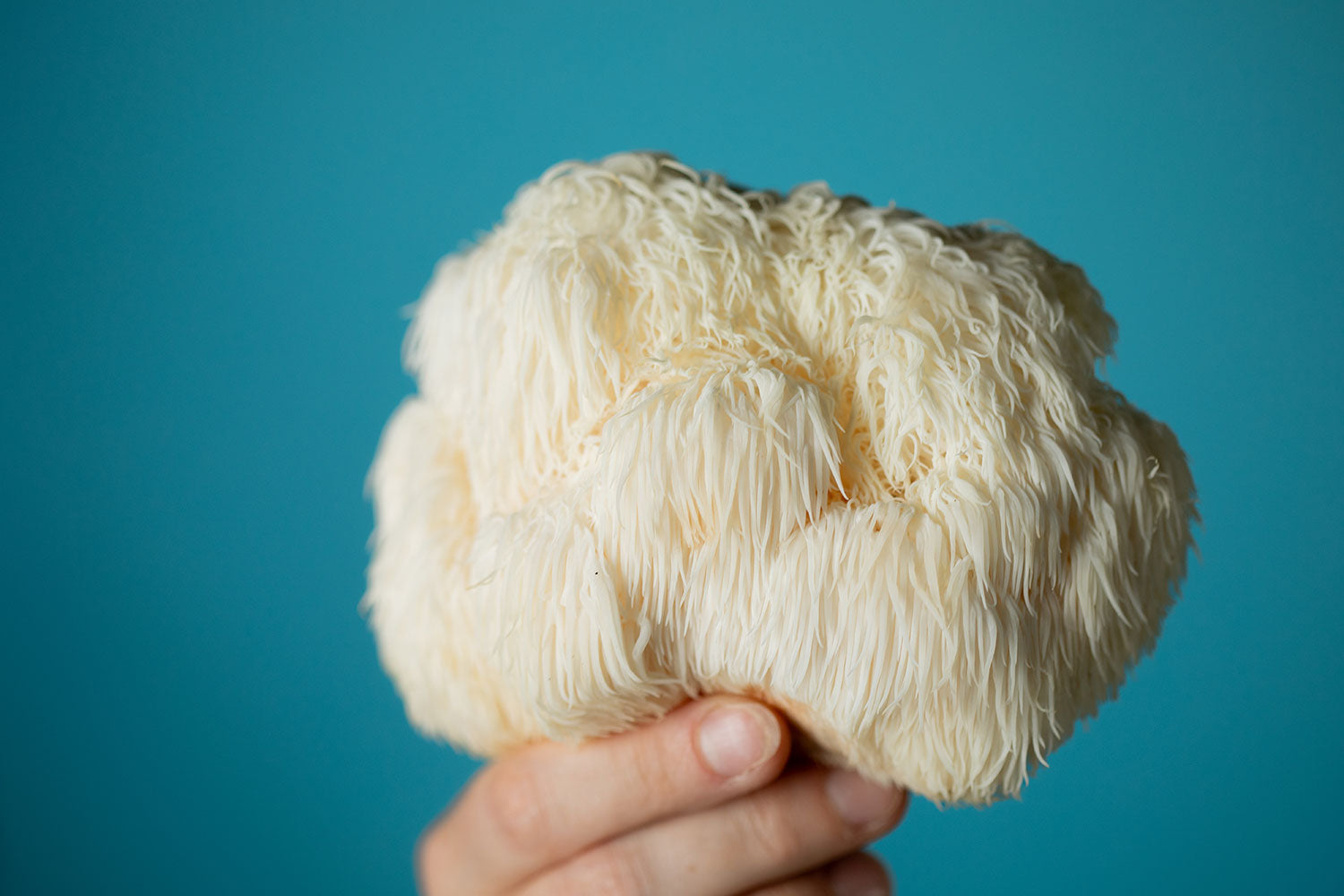
Lion's Mane (Hericium erinaceus) is the most extensively studied functional mushroom for cognitive health, and for good reason. Its unique compounds — hericenones and erinacines — are among the only natural substances known to stimulate Nerve Growth Factor (NGF) production in the brain. NGF plays a critical role in neuroplasticity, memory formation, and maintaining the health of existing neurons.
A 2024 study published in the National Library of Medicine examined the acute and chronic effects of Lion's Mane on cognitive function and found improvements in working memory, attention, and processing speed in healthy adults. The Alzheimer's Drug Discovery Foundation has also reviewed the evidence and noted promising, though still early, results for cognitive support.
Key studies: Lion's Mane cognitive function (PMC12030463) | Acute & chronic cognitive effects (PMC10675414) | Alzheimer's Drug Discovery Foundation review
How Does Lion's Mane Support Neuroplasticity?
Neuroplasticity is your brain's ability to form new connections and reorganize itself in response to learning, experience, or injury. NGF is a key regulator of this process. When NGF levels decline — as they do with age and under chronic stress — cognitive performance suffers. Lion's Mane's active compounds cross the blood-brain barrier and upregulate NGF expression, potentially reversing some of this decline.
This is particularly relevant for brain fog: when neural connections are sluggish or under-maintained, information processing slows. Supporting NGF production may help rebuild the signaling efficiency that makes thinking feel sharp and effortless.
Can Reishi Help With Stress-Related Brain Fog?
Stress is one of the primary drivers of brain fog, and Reishi (Ganoderma lucidum) is one of the most well-studied adaptogenic mushrooms. High cortisol impairs the hippocampus — the brain region central to memory and learning. By modulating the HPA (hypothalamic-pituitary-adrenal) axis, Reishi may help reduce the cortisol load that blunts cognitive performance.
Reishi also supports deep NREM sleep, and poor sleep is one of the most reliable ways to accumulate brain fog. If your brain fog worsens after bad nights, Reishi's sleep-supporting properties may be especially relevant. See our detailed breakdown in
Reishi for Stress and Sleep: Clinical Research Review
What About Chaga for Cognitive Clarity?
Chaga (Inonotus obliquus) is not a direct nootropic, but its extraordinary antioxidant profile makes it worth including in a brain fog discussion. Oxidative stress — excess free radical activity in brain cells — is now understood as a significant contributor to neuroinflammation and cognitive decline. Chaga has one of the highest ORAC (oxygen radical absorbance capacity) scores of any natural substance.
By reducing systemic oxidative stress, Chaga may create a more favourable neurological environment. It's best thought of as a protective complement to Lion's Mane rather than a standalone cognitive enhancer. Browse our
Chaga collection if you're interested in adding antioxidant support to your stack.
Does Extract Quality Affect Results for Brain Fog?
Absolutely — and this is where many mushroom products fall short. The active compounds that support cognitive function (beta-glucans, hericenones, erinacines) are not equally present in all products. Mycelium-on-grain products often contain more starch than bioactive compounds. Dual-extracted fruiting body products tend to deliver significantly higher concentrations of the compounds that research actually studies.
For a deep dive into why this matters, read our guides on
Mycelium vs Fruiting Body: What Science Actually Says and Beta-Glucans Explained: The Key to Effective Mushroom Supplements.
What Is the Best Mushroom Stack for Brain Fog?

For comprehensive brain fog support, a thoughtful combination of mushrooms may outperform a single species. A well-rounded cognitive stack might include Lion's Mane for neurogenesis and NGF support, Reishi for cortisol modulation and sleep quality, and Chaga for antioxidant and anti-inflammatory protection. This is exactly the philosophy behind how functional mushrooms are used in traditional medicine — synergistic, not singular.
-
Lion's Mane: NGF stimulation, neuroplasticity, memory and focus
-
Reishi: Cortisol modulation, sleep quality, calm mental energy
-
Chaga: Antioxidant protection, reduced neuroinflammation
Explore options in our Lion's Mane collection, or browse our full collection to build your stack. If you're new to functional mushrooms, start with The Complete Beginner's Guide to Functional Mushrooms.
What Does the Research Still Not Tell Us?
It's worth being honest here: while the early human studies on Lion's Mane and brain fog are promising, the field is still young. Most trials are small (under 100 participants), short in duration (under 12 weeks), and lack standardized dosing protocols. That doesn't mean the results are invalid — it means more research is needed to establish optimal doses, ideal populations, and long-term safety profiles at high doses.
What we can say confidently: no serious safety concerns have emerged, the mechanisms are biologically plausible, and several well-designed studies show measurable cognitive benefits. Stay tuned as the research matures.
Frequently Asked Questions
|
What is the best mushroom for brain fog? Lion's Mane is the most researched mushroom for brain fog. It stimulates nerve growth factor (NGF), supports neuroplasticity, and has shown cognitive benefits in human trials. Reishi and Chaga may also help by reducing stress and inflammation that contribute to foggy thinking. |
|
How quickly does Lion's Mane work for brain fog? Most human studies run 4 to 12 weeks. Some participants notice sharper focus within the first 2 weeks, but meaningful cognitive improvements are typically observed at the 4-week mark and beyond. Consistency matters more than high doses. |
|
What causes brain fog? Brain fog is often linked to chronic inflammation, poor sleep, hormonal imbalances, nutritional deficiencies, or high stress. Mushrooms like Lion's Mane address the neurological side, but addressing root causes (sleep, diet, stress) amplifies results. |
|
Can I take Lion's Mane every day? Yes — daily use is how most studies are structured. There are no known issues with long-term daily supplementation. Fruiting body extracts standardized to beta-glucan content are preferred for consistent results. |
|
Does Lion's Mane help with anxiety and brain fog together? Possibly. One 2019 study found Lion's Mane supplementation reduced irritability and anxiety in menopausal women. If both anxiety and brain fog are present, a stack including Reishi (for cortisol) and Lion's Mane (for neurogenesis) may be worth exploring. |
|
Are mushroom gummies as effective as capsules for brain fog? It depends on the extract quality and beta-glucan content, not the format. A high-quality gummy using dual-extracted fruiting body can be just as effective as a capsule. Check the label for mg of extract and beta-glucan percentage. |
|
What dose of Lion's Mane is used in studies? Most positive human studies use 500 mg to 3,000 mg of Lion's Mane extract daily, often split across two doses. Higher doses are not always better — extract quality (beta-glucan content, extraction method) matters more than raw milligrams. |
The Bottom Line on Mushrooms for Brain Fog
If you're dealing with brain fog and want to explore evidence-based natural options, Lion's Mane is the strongest candidate based on current research. Reishi and Chaga provide complementary benefits through different mechanisms. As always, extract quality is paramount — the benefits seen in research come from standardized, concentrated extracts, not raw powder or grain-heavy mycelium products.
Disclaimer: This article is for informational purposes only and does not constitute medical advice. Mushroom supplements are not intended to diagnose, treat, cure, or prevent any disease. Consult your healthcare provider before adding any supplement to your routine.
Leave a comment
All comments are moderated before being published.