Free Shipping on Orders over $75
★
Free Lion's Mane Gummies on Orders Over $150!
★


The Complete Beginner's Guide to Functional Mushrooms (2026 Edition)
9 minute read

If you've been noticing "functional mushrooms" on coffee bags, supplement shelves, and wellness blogs, you're not imagining things. This functional mushrooms guide exists because the market has exploded — and so has the confusion. The global functional mushroom supplement market is projected to exceed $65 billion by 2030. That kind of growth invites both genuine innovation and a lot of noise.
This guide cuts through the hype. Whether you're brand new to functional mushrooms or looking to make a more informed buying decision, here's what the research actually says — and what it means for you.
What are functional mushrooms?
Functional mushrooms are a specific category of fungi valued for their health-supporting properties beyond basic nutrition. Unlike culinary mushrooms (cremini, portobello, button), functional mushrooms contain concentrated bioactive compounds — primarily beta-glucans, polysaccharides, and triterpenes — that interact with the body's immune system, nervous system, and stress-response pathways.
The term "functional" distinguishes them from culinary varieties and stays within regulatory guidelines. These mushrooms are also classified as adaptogens — natural substances that help the body adapt to physical and mental stress by normalizing physiological processes. Unlike stimulants, adaptogens don't push the body in one direction; they help regulate and balance.
A brief history of functional mushrooms
Functional mushrooms aren't a wellness trend — they're one of the oldest therapeutic tools in human history. Understanding where they come from adds important context to the research we're seeing today.

Reishi was documented in Chinese medical texts as early as 100 BCE, described as the "Herb of Immortality" and reserved for emperors and nobility. In Traditional Chinese Medicine, Reishi, Chaga, and Cordyceps were each associated with specific organ systems and prescribed for longevity, energy, and immune resilience.
Modern Western science began catching up in the 1960s, when Japanese researchers isolated PSK — a specific polysaccharide fraction from Turkey Tail — and began studying its role in cancer-adjunct therapy. In 1993, Chinese female runners shattered world records at the World Championships, and their coach credited Cordyceps supplements as part of their training protocol. The controversy brought Cordyceps into the global conversation.
By the 2000s, peer-reviewed clinical trials were underway on Lion's Mane, Reishi, Chaga, and Cordyceps. Today, the research database runs into the hundreds of studies, and functional mushrooms are moving from fringe wellness into mainstream medicine, food science, and athletics.
The 7 most studied functional mushrooms
Not all functional mushrooms do the same thing. Each species has a distinct bioactive profile and research record. Here are the seven species at the core of Stay Wyld's formulations — each selected for clinical relevance and purity:

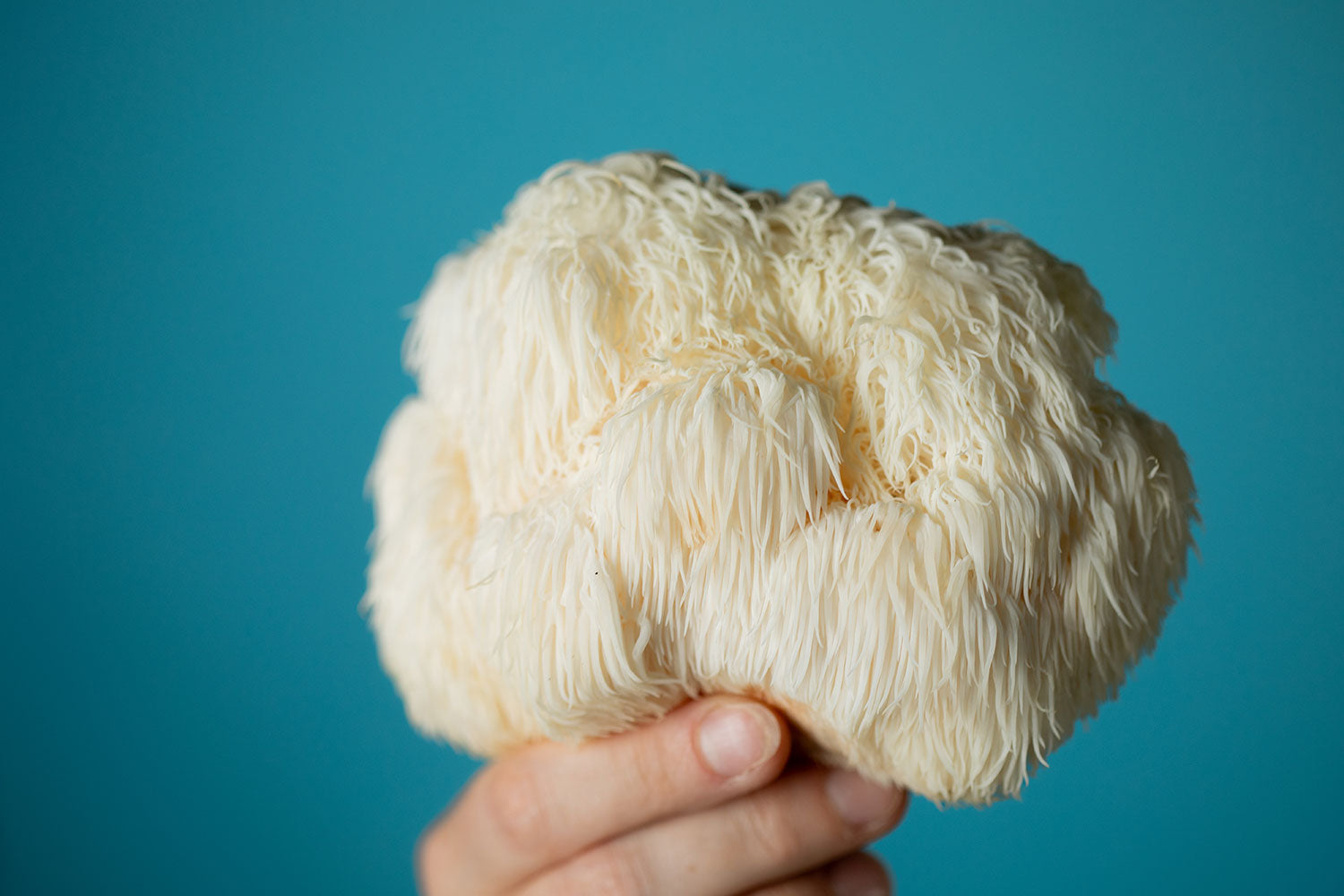
Lion's Mane (Hericium erinaceus) — The brain mushroom
Stay Wyld's hero ingredient. Lion's Mane is the only mushroom shown to stimulate nerve growth factor (NGF) — a protein that promotes the growth, maintenance, and repair of neurons. Research published in PMC confirmed NGF stimulation in both in vitro and animal models. Human studies show measurable improvements in memory and cognitive function after four to eight weeks of consistent use.* We add Lion's Mane to every product we make.
* These statements have not been evaluated by the FDA. This product is not intended to diagnose, treat, cure, or prevent any disease.
Chaga (Inonotus obliquus) — The antioxidant powerhouse
Chaga contains one of the highest ORAC (oxygen radical absorbance capacity) scores of any natural food — meaning it has an extraordinary capacity to neutralize free radicals.* It grows primarily on birch trees in cold northern climates, including Siberia, Canada, and Scandinavia. Beyond antioxidant action, Chaga has been studied for immune support and anti-inflammatory properties.* Traditionally consumed as a tea in Russia and Eastern Europe for centuries.
Reishi (Ganoderma lucidum) — The adaptogen
Reishi has the longest documented history of any functional mushroom — over 2,000 years of use in Chinese and Japanese medicine. It contains over 400 bioactive compounds, including triterpenoids (unique to Reishi) that are associated with stress response regulation, cortisol modulation, and sleep quality.* Clinical research supports its role as an adaptogen — helping regulate the body's stress response without sedation.
Cordyceps (Cordyceps militaris) — The energy mushroom
Cordyceps increases ATP (adenosine triphosphate) production — the energy currency of the cell.* Human studies show improved exercise performance, higher oxygen utilization (VO2 max), and faster recovery after supplementation.* Originally derived from a parasitic fungus that grows on insects in the Himalayas, modern Cordyceps supplements use Cordyceps militaris grown on plant-based substrate — equally potent and more sustainable.
Turkey Tail (Trametes versicolor) — The immune defender
Turkey Tail is the most research-backed mushroom for immune support. Its two primary polysaccharides — PSK (polysaccharide-K) and PSP (polysaccharide-peptide) — have been studied extensively in Japan and have been approved as adjunct cancer therapy in several Asian countries.* A Bastyr University trial was FDA-approved to study Turkey Tail in breast cancer patients, representing one of the first FDA-approved trials of a mushroom supplement.
Maitake (Grifola frondosa) — The metabolic mushroom
Maitake contains a specific beta-glucan fraction called D-fraction, which has been studied for blood sugar regulation and insulin sensitivity.* It's considered one of the better-researched mushrooms for metabolic health. Maitake also contributes meaningfully to immune function and has been studied alongside cancer adjunct therapy alongside Turkey Tail.
Shiitake (Lentinula edodes) — The heart and immune mushroom
Shiitake contains Lentinan — a specific beta-1,3-glucan polysaccharide that has demonstrated immune-boosting and anti-tumor properties in research.* It's also one of the richest food sources of eritadenine, a compound shown to support healthy cholesterol levels.* Widely used in Asian culinary traditions for thousands of years, Shiitake's health profile is backed by some of the earliest research in the functional mushroom field.
* These statements have not been evaluated by the FDA. This product is not intended to diagnose, treat, cure, or prevent any disease.
What does the science say about functional mushrooms?
A landmark 2021 review published in the International Journal of Molecular Sciences — cited over 570 times — analyzed bioactive compounds across medicinal mushroom species and confirmed immunomodulatory, anti-inflammatory, and antitumor properties. This is one of the most comprehensive reviews of the field and forms the backbone of how we talk about the research.
A Singapore-based clinical study found that adults who consumed two or more servings of mushrooms per week had a 50% lower risk of mild cognitive impairment compared to those who ate less than one serving weekly — a striking finding now driving significant Lion's Mane research.
UCLA Health has independently confirmed seven measurable health benefits of mushrooms, including immune function, antioxidant protection, and cognitive support — adding mainstream medical credibility to the growing body of evidence.
The data is strong. But it's only as good as the quality of the supplement you're taking — which is why extraction, sourcing, and beta-glucan content matter so much.
Why functional mushrooms are leading wellness in 2026
Functional mushrooms aren't trending by accident. Several converging forces have pushed them to the front of the wellness market:
-
Consumer fatigue with synthetic supplements and energy drinks — people want natural, food-based solutions
-
Rising rates of cognitive decline, chronic stress, and immune dysfunction driving demand for evidence-based naturals
-
A wave of peer-reviewed clinical studies confirming effects that traditional medicine described centuries ago
-
Product innovation — mushroom coffee, gummies, strips, and functional beverages making daily use frictionless
-
AI and personalized health tools helping consumers match specific mushrooms to specific needs
Stay Wyld launched in response to all of this — and specifically to the quality gap it created. The boom attracted brands with no growing standards, no lab testing, and no accountability. We built the opposite: a company that grows its own mushrooms, tests every batch, and publishes what it finds.
How to choose a quality functional mushroom supplement
The market is full of products that use mycelium-on-grain (MOG) — a cheaper form that blends mushroom mycelium with its rice or oat growing substrate. The result is a supplement diluted with starch, not functional compounds.
When evaluating any functional mushroom product, look for these markers of quality:
-
Fruiting body extract — the actual mushroom, not the root network grown on grain
-
Disclosed beta-glucan content — 20% or higher is solid; 30%+ is strong
-
Third-party testing — verified by an independent lab, not just the manufacturer
-
Organic certification — no pesticides, heavy metals, or uncontrolled growing conditions
-
No fillers or flow agents — read the "Other Ingredients" section carefully
At Stay Wyld, we grow our mushrooms in Pemberton, British Columbia — Canadian Certified Organic, extracted in small batches, and third-party tested in Canada. We publish our beta-glucan levels. Most brands don't.
How to add functional mushrooms to your daily routine
Functional mushrooms are adaptogens — their benefits build in the body over time rather than delivering a single jolt. Most users report noticeable effects within two to eight weeks of consistent daily use. The form you choose should match your lifestyle:
|
Format |
Best For |
Notes |
|
Capsules |
Precise daily dosing |
Easiest to maintain consistency |
|
Powders |
Smoothies, coffee, food |
Flexible dosing; earthy flavour |
|
Gummies |
Beginners, on-the-go |
Pre-measured; enjoyable ritual |
|
Functional drinks |
Active lifestyle, hydration |
Lion's Mane Iced Tea, electrolyte blends |
|
LST Strips |
Fast-acting, on-the-go |
Stay Wyld innovation — dissolves fast, no water needed |
Are functional mushrooms safe?
For most healthy adults, functional mushrooms are well-tolerated with minimal side effects. Research across multiple species confirms a broad safety profile at standard doses. That said:
-
Consult your doctor if you're pregnant, nursing, or taking immunosuppressant medications (some species can modulate immune function, which may interact with immunosuppressants)
-
Start with one species at a time to understand your individual response — introduce new species one at a time over several weeks
-
Rare reported side effects include mild digestive discomfort in sensitive individuals, typically resolving with food or dose adjustment
-
Quality matters — poorly processed or contaminated supplements carry risks that high-quality, tested products don't
All Stay Wyld products are Health Canada approved (NPN-licensed) and third-party tested in Canada. You know exactly what you're getting — and what you're not.
Frequently asked questions about functional mushrooms
What are functional mushrooms good for?
Functional mushrooms are used to support cognitive function, immune health, energy, stress response, and sleep quality. Different species target different areas — Lion's Mane for brain health, Cordyceps for energy and endurance, Reishi for stress and sleep, Chaga for immune and antioxidant support, and Turkey Tail for immune defense and gut health.
Are functional mushrooms the same as medicinal mushrooms?
The terms are often used interchangeably, but "functional mushrooms" is the preferred regulatory term in consumer content. "Medicinal" is typically reserved for clinical and scientific contexts. Both refer to the same group of health-supporting fungal species.
How long does it take for functional mushrooms to work?
Most people notice effects within two to eight weeks of consistent daily use. Acute benefits (like energy from Cordyceps) may appear within days. Cognitive and immune benefits from Lion's Mane and Chaga typically develop over four to eight weeks as bioactive compounds accumulate and modulate physiological pathways.
What's the difference between fruiting body and mycelium?
The fruiting body is the visible mushroom — the cap and stem. Mycelium is the root-like underground network. Most clinical research focuses on fruiting body extracts, which contain significantly higher concentrations of beta-glucans than mycelium-on-grain products. MOG products are often diluted with grain starch and don't deliver comparable potency.
Can I take multiple functional mushrooms at the same time?
Yes — many formulations, including Stay Wyld's Daily Immunity 5-Blend, combine multiple species for complementary benefits. The species don't compete with one another; they support different systems simultaneously. If you're new, starting with one species and building up over four weeks is a practical approach.
Do functional mushrooms have side effects?
Side effects are rare and mild. Some individuals experience minor digestive adjustment in the first few days of use. Reishi may cause drowsiness at high doses in some people. As with any supplement, start at the recommended dose and adjust as needed. If you have autoimmune conditions or are immunocompromised, consult your healthcare provider first.
"Mushrooms changed everything for us. They might just do the same for you." — Chris, Founder & CEO, Stay Wyld Organics
Ready to start your functional mushroom journey?
→ Shop the Beginner Mushroom Bundle — Lion's Mane, Chaga + Daily Immunity Blend
Leave a comment
All comments are moderated before being published.