Free Shipping on Orders over $75
★
Free Lion's Mane Gummies on Orders Over $150!
★


Mycelium vs Fruiting Body: What Science Actually Says
6 minute read

Walk into any supplement aisle and you'll find mushroom products that look almost identical — same species names, similar price points, and nearly identical marketing claims. But inside the capsule, the difference can be dramatic. The mycelium vs fruiting body debate is one of the most important quality questions in the functional mushroom industry, and it's one most brands would rather you not ask.
Here's an honest breakdown of what each part of the mushroom is, what the research shows, where the numbers differ — and why it matters to your results.
Understanding the anatomy of a mushroom
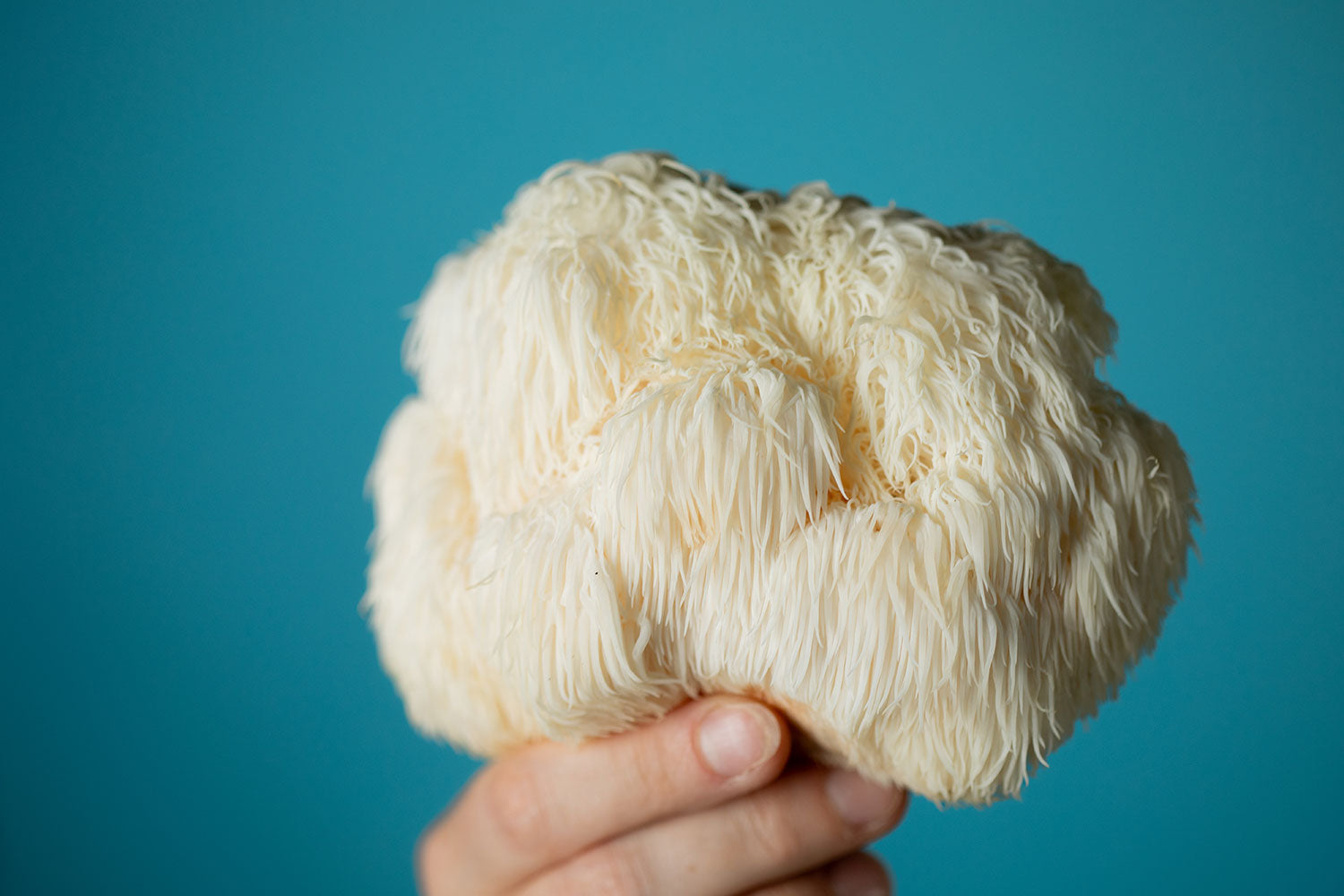
A mushroom has two primary structures. The fruiting body is the visible part — the cap, stem, and gills — that produces spores for reproduction. Beneath the surface lies the mycelium, a dense web of thread-like cells called hyphae that extend through soil, wood, or substrate to absorb nutrients.
Both structures contain bioactive compounds. The critical question isn't whether mycelium has any value — it's whether a supplement labelled with a mushroom species name is actually delivering those compounds in meaningful concentrations.
The mycelium-on-grain (MOG) problem
Most commercial mycelium-based supplements are produced through a process called mycelium-on-grain (MOG). Mushroom mycelium is inoculated onto a cereal grain substrate — typically rice or oats — and allowed to colonize it. The entire mass, grain and all, is then dried, ground, and encapsulated.
The result: your supplement contains a mixture of mycelium and starchy grain residue. This is the core of the problem — and it goes deeper than most consumers realize.
Alpha-glucans vs beta-glucans: the test that brands exploit
Here's the part the industry rarely explains clearly. Standard tests for "polysaccharide content" — commonly displayed on mushroom supplement labels — measure all polysaccharides in the product. That includes both beta-glucans (the active immune-supporting compounds from mushrooms) and alpha-glucans (starchy carbohydrates from grains like rice and oats).
In a MOG product, the grain substrate contributes a significant amount of alpha-glucans to the total polysaccharide count. A brand can report a polysaccharide percentage of 40% or higher on a MOG product while the actual beta-glucan content — the only clinically meaningful marker — may be as low as 5 to 10%.
Key distinction: "Polysaccharides" = all carbohydrate chains (alpha + beta). "Beta-glucans" = specifically the active immune compound from mushrooms. Always look for beta-glucan %, not polysaccharide % alone.
The numbers behind the quality gap
The difference between fruiting body and MOG products isn't marginal — it's substantial. Laboratory analysis of quality fruiting body extracts consistently shows beta-glucan content between 20% and 40% by dry weight, depending on species. MOG products typically test between 5% and 15% for actual beta-glucan content when properly measured using species-specific assays.

That gap represents a 3x to 5x difference in active compound concentration for the same labelled mushroom species at the same capsule size. It's why two Lion's Mane products with similar marketing can produce completely different outcomes.
What the research shows about fruiting body extracts
The overwhelming majority of clinical studies on functional mushrooms — Lion's Mane, Reishi, Chaga, Cordyceps, Turkey Tail — use fruiting body extracts. A comprehensive comparative review published in PMC (PMC9315710) analyzed edible fungi and confirmed that fruiting bodies contain significantly higher concentrations of key bioactive polysaccharides across most studied species.
A 2017 study published in Nature Scientific Reports tested 19 commercially available Reishi supplements. Only 5 of the 19 matched their label claims for actual mushroom content. The rest were diluted, mislabelled, or otherwise misrepresented — a finding that highlights how widespread the quality problem is.
A 2019 study in BMC Complementary Medicine and Therapies examined Host Defense's mycelium-based products and found that the substrate grain contributed meaningfully to the product's mass — complicating potency claims. Some immune-stimulating activity was present, but it was substantially lower than equivalent fruiting body doses.

What about extraction method?
Even within fruiting body products, extraction method affects what compounds make it into your supplement. Hot water extraction (decoction) is the traditional method and effectively extracts beta-glucans and polysaccharides — the primary active compounds in most mushroom species. Dual extraction (hot water + alcohol) additionally captures triterpenoids, which are particularly important for Reishi.
Stay Wyld uses hot water extraction across all products. For Reishi specifically, we also apply a secondary ethanol extraction step to ensure full-spectrum triterpene content alongside beta-glucans. This matters for the adaptogenic and sleep-supporting benefits associated with Reishi specifically.
How to read a supplement label
The labelling problem is real, and regulators are struggling to keep pace. In 2022, Nammex submitted a citizen petition to the FDA requesting that mycelium-on-grain products not be labelled as mushroom supplements — a direct response to widespread consumer confusion.
|
Label Element |
What It Means |
Red Flag |
|
"Fruiting body extract" |
The actual mushroom — high beta-glucan potential |
If missing, assume MOG |
|
Beta-glucan % disclosed |
The only meaningful potency marker |
Missing = untestable quality |
|
Polysaccharide % only |
May include grain starch (misleading on MOG) |
Never substitute for beta-glucan % |
|
"Mycelium" + grain substrate |
MOG product |
Low beta-glucan, high starch |
|
Organic certification |
Verified growing conditions |
No cert = unknown sourcing |
|
Third-party tested |
Independent quality verification |
Self-reported claims only = risk |
Why Stay Wyld only uses fruiting body extract
Stay Wyld's decision to use only fruiting body extracts wasn't a marketing strategy — it was a quality commitment made before the company launched its first product. Every mushroom we use is grown from spore to fruiting body in our facility in Pemberton, British Columbia. We control the substrate, the humidity, the extraction process, and the third-party testing.
We publish our beta-glucan percentages — not our polysaccharide percentages — because we want you to have the number that actually matters. Most brands don't.
New to functional mushrooms? Start with our Complete Beginner's Guide to Functional Mushrooms to understand which species might best support your goals.
Frequently asked questions
Is mycelium completely useless in supplements?
Not entirely. Mycelium does contain beneficial compounds, and some research has found immunomodulatory activity in mycelium-based products. However, when grown on grain, the dilution from substrate starch makes potency unreliable. If a mycelium product doesn't disclose its beta-glucan percentage and substrate content, there's no way to verify its quality.
Does the FDA regulate mushroom supplement labelling?
Dietary supplements in the US are not pre-approved by the FDA. The agency has issued guidance on mushroom labelling but enforcement is limited. Industry groups — including Nammex — are pushing for stricter standards. Health Canada has more robust NPN licensing, which is one reason many quality-focused brands (including Stay Wyld) prioritize Canadian certification.
How can I tell if a product uses fruiting body or mycelium?
Look for "fruiting body extract" explicitly on the label. Also check for disclosed beta-glucan percentages (not just polysaccharides). If neither is present, or if you see "mycelium" alongside a grain (rice, oats), the product is likely MOG. Asking the brand directly for a Certificate of Analysis is also a reasonable step.
What beta-glucan percentage should I look for?
Quality fruiting body extracts typically contain 20–40% beta-glucans depending on species and extraction method. Stay Wyld products consistently exceed 20% beta-glucans, with several species testing above 30%. MOG products frequently test below 10% for actual beta-glucans when measured with species-specific assays.
Why don't more brands use fruiting body?
Cost and time. Growing mushrooms to full fruiting body maturity takes significantly more time, space, and resources than inoculating grain with mycelium. MOG production can be done in weeks at industrial scale. Fruiting body cultivation takes months. Brands that prioritize margin over quality choose MOG. Stay Wyld chose the harder, more expensive path.
What is dual extraction and do I need it?
Dual extraction uses both hot water (for beta-glucans) and alcohol (for triterpenoids) to capture a fuller compound spectrum. It's most relevant for Reishi, where triterpenes are responsible for many of its adaptogenic and sleep benefits. For most other species — Lion's Mane, Chaga, Turkey Tail, Cordyceps — hot water extraction captures the primary active compounds. Stay Wyld applies dual extraction to Reishi products.
"We grow our own. It's the only way to guarantee what's actually in the capsule." — Chris, Founder & CEO, Stay Wyld Organics
See the difference quality makes.
→ Shop Lion's Mane Fruiting Body Capsules — Grown in Pemberton, BC
Leave a comment
All comments are moderated before being published.